Complex network
Mathematical biology
Statistical analysis
Ecological modelling
Big data analysis
Machine learning
Optimal control
https://scholar.google.com/citations?user=9GSPC4wAAAAJ&hl=zh-CN&oi=sra


 Personal HomepagePersonal Homepage
Professor, PhD Supervisor, Leader of the Biomathematics Research Team, Longjiang Distinguished Professor, Reserve Leader of Heilongjiang Provincial Leading‑Talent Echelon for Professional and Technical Personnel, and Director of Heilongjiang Provincial Key Laboratory of Engineering and Applied Mathematics. She has published more than 60 SCI papers in journals including Journal of Mathematical Biology, SIAM Journal on Applied Mathematics, and Bulletin of Mathematical Biology. In addition, he/she serves on the editorial boards of T2‑ranked Chinese Mathematical Society journals such as Bulletin of Mathematical Biology, PLOS Computational Biology, and International Journal of Biomathematics.
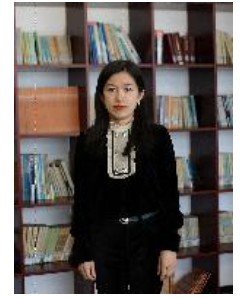


Name : Ling Xue
School/Department: School of Mathematics, Harbin Engineering University
Administrative Position: Director of Key Laboratory of HLJ Province, China
Degree: Doctoral Degree in Philosophy
Professional Title: Professor
Status: Employed
Academic Titles: Leader of Mathematical Biology at Harbin Engineering University
Discipline: Mathematics
Complex network
Mathematical biology
Statistical analysis
Ecological modelling
Big data analysis
Machine learning
Optimal control
https://scholar.google.com/citations?user=9GSPC4wAAAAJ&hl=zh-CN&oi=sra
The Mathematical Biology Research Team at Harbin Engineering University focuses on cutting-edge issues in life and health, leveraging interdisciplinary approaches in mathematical modeling, computational science, and data science. The team conducts frontier research in areas such as bio-mathematics, complex network dynamics, and multi-scale system modeling, including infectious disease transmission prediction, mathematical methods for precision medicine, and ecosystem stability analysis. It is committed to advancing the deep integration of mathematical theory with life sciences, medicine, and ecology. Emphasizing interdisciplinary innovation, the team cultivates high-level talents with expertise in mathematics, computation, and biomedical sciences. Through international collaboration and industry-academia partnerships, it provides decision-making support in public health. In recent years, the team has published a series of high-impact journal papers, actively undertaken national research projects, and established collaborations with leading universities and research institutions worldwide.
1. Dynamics and Control Strategy Analysis of Infectious Disease Transmission Based on Heterogeneous Networks, Shanxi University, Shanxi, April 18, 2026
2. A Mathematical Framework for Optimizing Synergistic Cancer Treatments, Jinan University, Guangzhou, March 21, 2026
3. Optimizing Synergistic Cancer Treatments: A Unified Mathematical Framework from Anti-Angiogenic Chemotherapy to mRNA Vaccine–Immunotherapy Combinations, PolyU-SZRI The Second Symposium on Theoretical Analysis and Applications in Biological Dynamical Systems, January 21, 2026
4. Optimizing Combination Cancer Therapy: A Unified Mathematical Framework from Anti-Angiogenesis to Immunotherapy, Chongqing Jiaotong University, Chongqing, December 6, 2025
5. Mathematical Frameworks for Optimizing Combination Cancer Therapies: From Anti-Angiogenesis to Immunotherapy, Northeast University, Shenyang, November 21, 2025
6. Mathematical Modelling and Optimization of Medication Regimens for Combination Immunotherapy in Breast Cancer, Ningxia University, September 26, 2025
7. Research on Heterogeneous Transmission Modeling and Optimization of Prevention and Control Strategies for Respiratory Infectious Diseases, Ningxia Medical University, Yinchuan, September 26, 2025
8. Research on Heterogeneous Transmission Modeling and Optimization of Prevention and Control Strategies for Respiratory Infectious Diseases, plenary talk at Symposium on "Charming Mathematics" Western Tour, Yinchuan, September 27, 2025
9. Research on Heterogeneous Transmission Modeling and Optimization of Prevention and Control Strategies for Respiratory Infectious Diseases, plenary talk at Academic Annual Meeting of the Mathematical Society of Heilongjiang Province, Jiamusi, August 16, 2025
10. Modeling the transmission and control using a Watts-Strogatz network of Monkeypox and Zika, Xinjiang International Symposium 2025: Cutting-Edge Advances in Biological Dynamical Systems, Urumqi, July 16, 2025
11. Modeling Mpox Transmission: Insights from Behavioral Networks and Age Heterogeneity, ACMB-JSMB, Kyoto, July 9, 2025
12. Mathematical Modeling and Optimization of Combination Immunotherapy for Breast Cancer: Integrating mRNA Vaccines and Anti-CTLA-4 Antibodies. Beijing Computational Science Research Center, Beijing, June 16, 2025
13. The applications of some mathematical models. The Hong Kong Polytechnic University. Hong Kong, August 13, 2024
14. Evaluating the impact of diagnostic delay and vaccination with an age-structured model, SMB Annual Meeting, Seoul, Korea, July 1, 2024
15. Modelling the impact of diagnostic delay and vaccination on TB via an age-structured model, The 14th International Conference on Recent Advances in Applied Dynamical Systems, Xinyang, Henan, May 31, 2024
16. Evaluating the impact of diagnostic delay and vaccination with an age-structured model, Anshan, Liaoning, April 21, 2024
17. Vaccine hesitancy promotes emergence of new SARS-CoV-2 variants, The 3rd Mathematical and life Science Conference, Wuxi, Jiangsu, October 21, 2023
18. Mathematical insights into the influence of interventions on sexually transmitted,The 10th National Conference on Nonlinear Biodynamic Systems, Taiyuan, Shanxi,July 31, 2023
19. Modelling the treatment of melanoma with dendritic cell vaccines and immune checkpoint inhibitors, The 8th CIJK Conference on Mathematical and Theoretical Biology, Jizhou Island, Korea,June 29, 2023
20. Assessing the Impact of Serostatus-Dependent Immunization on Mitigating the Spread of Dengue Virus. Symposium on modelling and analysis of infectious diseases. Jiangsu University. December 17, 2022
21. Modelling the treatment of melanoma with dendritic cell vaccines and immune checkpoint inhibitors. North China University of Water Resources and Electric Power. December 6, 2022
22. Modelling the treatment of melanoma with dendritic cell vaccines and immune checkpoint inhibitors. Henan Normal University. November 27, 2022
23. Network modeling for containing the spread of COVID-19 epidemic, Henan University. Henan University. November 28, 2022
21. Evaluating the effectiveness of control measures to minimize the risk of monkeypox outbreak in China through international arrivals, 2022 Mathematics-Tianyuan: Canada-China Symposium on Modelling, Prevention and Control of Zoonoses, Nov. 16, 2022
25. Assessing the Impact of Serostatus-Dependent Immunization on Mitigating the Spread of Dengue Virus. International Symposium on multi-scale modelling optimal control strategies for vector-borne diseases. Xinyang Normal University. November 5, 2022
26. Long-range forecasting of HIV epidemic in China with fear effect and 90-90-90 strategies Shaanxi Normal University. International Conference on edge-cutting problems of Mathematical Biology. October 20, 2022
27. Quantifying the impact of mitigation strategies for tuberculosis in China based on an age-structure model. Xidian University. July 5, 2022
28. Modelling the transmission dynamics of tuberculosis in China based on an age-structure to achieve the goals of WHO. Shaanxi Normal University. September 24, 2022
29. Modelling the impact of NPIs and mutations on the transmission dynamics of COVID-19. The ninth annual meeting of the Biomathematics Professional Committee of the Chinese Mathematical Society, Xinxiang, Henan, August 18, 2022
30. Quantifying the impact of mitigation strategies for tuberculosis in China based on an age-structure model. The ninth annual meeting of the Biomathematics Professional Committee of the Chinese Mathematical Society, Xinxiang, Henan, August 18, 2022
31. Modelling the impacts of NPIs on mitigating the spread of COVID-19 epidemic. Harbin Normal University. July 8, 2022
32. Modelling the impact of NPIs and mutations on the transmission dynamics of COVID-19. Summer Institute on Modeling and Predictive Early Warning of the Transmission Dynamics of Emerging Infectious Diseases. North University of China. July 27. 2022
33. Comparing the epidemiological characteristics of Omicron with previous variants and influenza. Shanxi University. July 25, 2022
34. Quantifying the impact of mitigation strategies for tuberculosis in China based on an age-structure model. Nanjing University of Aeronautics and Astronautics. June 26, 2022
35. Quantifying the impact of mitigation strategies for tuberculosis in China based on an age-structure model. Southwest University. May 18, 2022
36. Modelling the transmission dynamics of tuberculosis in China based on an age-structure to achieve the goals of WHO. Anhui University. April. 14, 2022
37. Evaluating strategies for tuberculosis in China to achieve the goals of WHO based on an age-structure model. Tiangong University. April 7, 2022
38. Dynamics of tumor growth under the immunotherapy for Melanoma. Shanxi University. January 25, 2022
39. Dynamics of tumor growth under the combined immunotherapies for Melanoma. Shanxi University. December 6, 2021
40. Mitigating the spread of multi-strain dengue virus via multiple strategies. 2021 China-Canada Symposium on Modelling, Prevention and Control of Infectious Diseases. September 15, 2021
41. Modelling the impact of Dendritic cell vaccines and Immune checkpoint inhibitors on melanoma, Shanghai Normal University, September 23, 2021
42. Network modeling for containing the spread of COVID-19 epidemic. Huazhong Normal University. November 13, 2020
43. Modeling and analysis of vaccinating strategies for mitigating dengue virus transmission.The 8th International forum for sustainable management of disease vectors, Suzhou, October 29, 2020
44. Optimizing control strategies of mitigation the spread of multiple strains of dengue viruses. Guangzhou University. October 25, 2020.
45. Assessing the impact of non-pharmaceutical intervention strategies for containing COVID-19 epidemics. SIAM TX-LA annual meeting. USA. October 17, 2020
46. Evaluating the impact of NPIs on the spread of COVID-19 epidemic. Shanxi University. October 16. 2020
47. Predicting the transmission potential and quantifying the impact of NPIs on COVID-19. Heilongjiang University. June 12, 2020
48. Fighting against Chikungunya, Dengue Fever, and Zika with biological weapons. Lanzhou University of Technolgy. November 10, 2019
49. Modeling transmission dynamics and mitigation strategies of vector-borne diseases. Northwest University of Nationlities, November 8, 2019
50. Stability of a dengue epidemic model with independent stochastic perturbations, The 2nd international conference on Biomathematical Modeling and Stochastic Analysis, Huaian, Jiangsu, November 2, 2019
51. Transmission dynamics of multi-strain dengue virus with cross-immunity, The 7th China-India-Japan-Korea International Conference on Mathematical Biology, Beijing, August 26,2019
52. Fighting against vector-borne diseases with biological weapons, Shanxi University, Shanxi, Taiyuan, July 31, 2019
53. Optimal control of a multi-strain dengue virus transmission model, Symposium on recent advances in differential equations and mathematical biology, Zhongbei University, Shanxi, Taiyuan, June 26, 2019
54. Mitigating the transmission of Chikungunya, Dengue Fever, and Zika using Wolbachia, Sunflower networking group, Kansas State University, Manhattan, Kansas, April 10, 2019
55. Modeling Transmission dynamics and mitigation strategies of vector-borne diseases. 2019 NPU Spring Workshop Northwest University, February 24, 2019
56. Geospatial analysis of Lyme disease in Connecticut and spatial-temporal distribution of dengue in Sri Lanka, The first international conference on data based biological models and analysis, Huaiyin, Jiangsu, November 30, 2018
57. Modeling and analysis of vaccinating strategies for mitigating dengue virus transmission, The first Northeast conference on mathematical Biology, Northeast Normal University, Changchun, Jijin, November 24, 2018
58. Modeling and analysis of vaccinating strategies for mitigation the transmission of dengue virus, The Seventh International Symposium on Sustainable Vector Control, Ningbo, Zhejiang, October 24, 2018
59. Comparing the Effectiveness of Different Strains of Wolbachia for Controlling Chikungunya, Dengue Fever, and Zika. Shanghai Normal University, Shanghai, October, 2018
60. Comparing the Effectiveness of Different Strains of Wolbachia for Controlling Chikungunya, Dengue Fever, and Zika. Nanjing Science and Technology University, Nanjing, August, 2018
61. Comparing the Effectiveness of Different Strains of Wolbachia for Controlling Chikungunya, Dengue Fever, and Zika. International conference on recent progress of Mathematical Biology. Shanghai Science and Technology University, Shanghai, July, 2018
62. Comparing the Effectiveness of Different Strains of Wolbachia for Controlling Chikungunya, Dengue Fever, and Zika.
The 6th international conference on Mathematical Biology. Beijing, June, 2018
63. Comparing the Effectiveness of Different Strains of Wolbachia for Controlling Chikungunya, Dengue Fever, and Zika.
The 11th AIMS Conference on Dynamical Systems, Differential Equations and Applications. Taiwan, July, 2018
64. Important metrics for measuring the dynamics for vector-borne diseases. Department of Mathematics. University of Manitoba, Winnipeg, Manitoba, January, 2017
65. Two-Sex Mosquito Model for the Spread of \emph{Wolbachia}. AMS Special Session Computing Intensive Modeling in Mathematical and Computational Biology at the 2015 Joint Mathematics Meetings. San Antonio, TX. January, 2015
66. Two-Sex Mosquito Model for the Spread of \emph{Wolbachia}. The American Society of Tropical Medicine and Hygiene meeting. New Orleans, LA. November, 2014.
67. A Hierarchical Network Approach for Modeling Rift Valley Fever Epidemics with Applications in North America. Department of Electrical and Computer Engineering. Kansas State University. Manhattan, KS. October, 2013
68. Network Level Extinction Threshold and Reproduction Number for Vector-borne Diseases. Department of Mathematics. Tulane University. New Orleans, LA. September, 2013
69. Network Level Reproduction Number for Infectious Diseases with both Vertical and Horizontal Transmission. Society for Mathematical Biology Annual Meeting and Conference. Arizona State University. Tempe, AZ. June, 2013
70. A Network-based Meta-population Approach to Model Rift Valley Fever Epidemics. Multi-scale Computational Modeling for Zoonotic Epidemics Workshop. Kansas City, KS. October, 2013